

Last updated: 28 ก.พ. 2569 | 8 จำนวนผู้เข้าชม |

ผลลัพธ์อาจแตกต่างกันไป แล้วแต่บุคคล
แนวทางการวินิจฉัยและรักษาภาวะผมบางจากพันธุกรรม (Androgenetic Alopecia)
ภาวะผมบางจากพันธุกรรม (AGA) เป็นประเด็นที่ส่งผลต่อความมั่นใจอย่างมากในปัจจุบัน บทความนี้รวบรวมข้อมูลตั้งแต่การตรวจวินิจฉัยไปจนถึงเทคโนโลยีการรักษาครับ
1. การตรวจวินิจฉัยและลักษณะอาการ
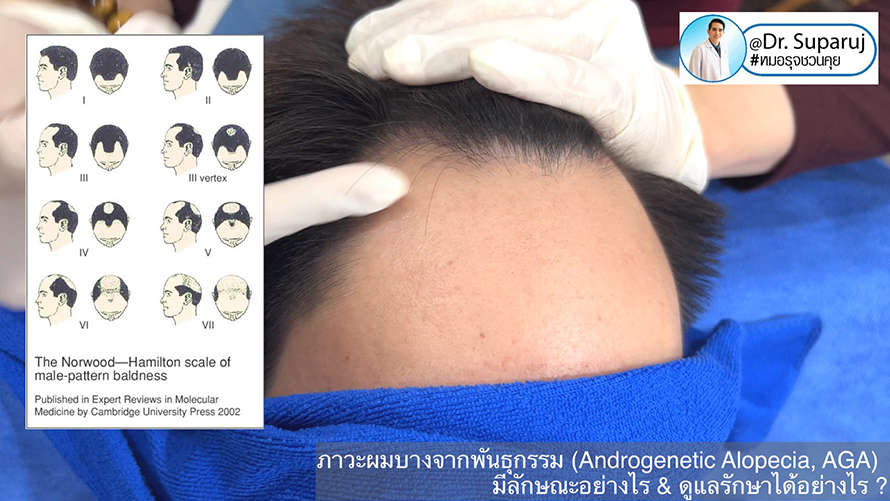
• รูปแบบการบาง: ในเพศชายมักเริ่มจากการถดถอยของแนวผมด้านหน้าจนเป็น "รูปตัว M" (M-Shape) และการบางบริเวณกลางศีรษะที่เรียกว่า "ลักษณะไข่ดาว" (Vertex)
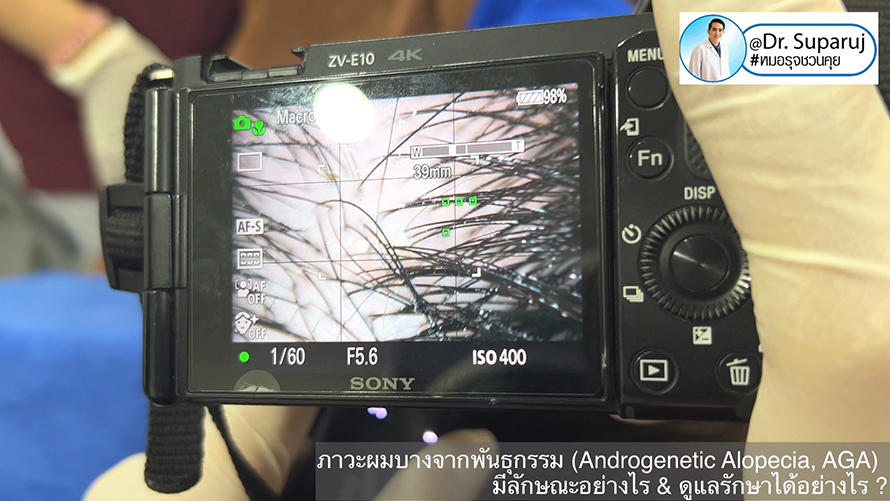
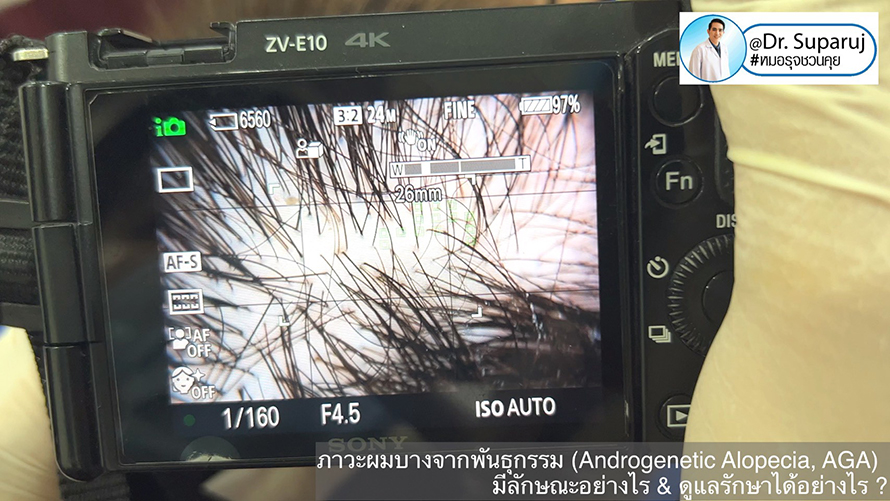
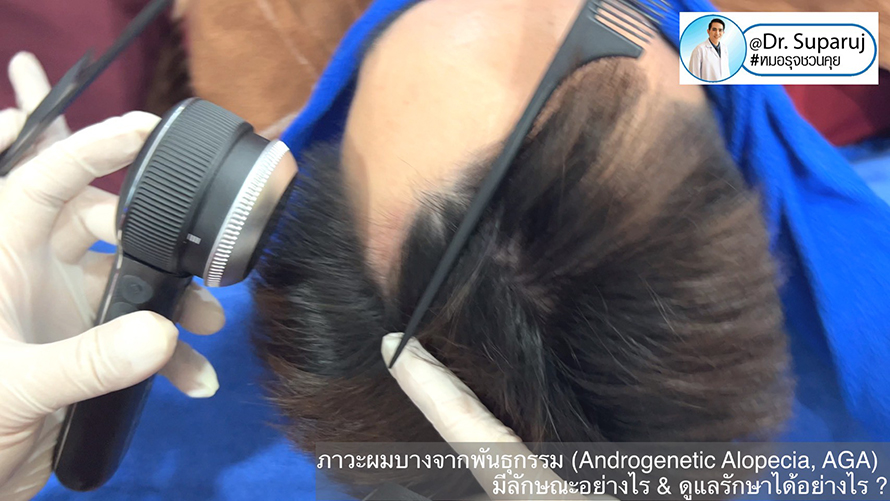
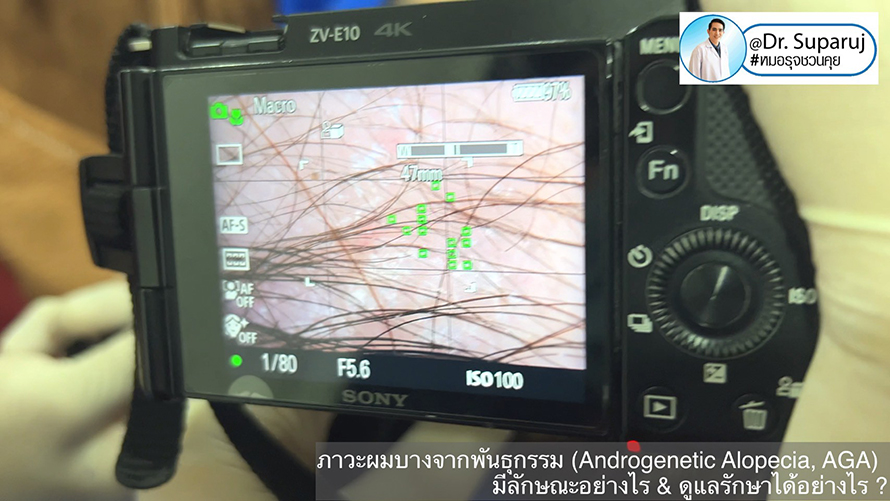
• การตรวจด้วยกล้องขยาย (Trichoscopy): จะพบว่าเส้นผมมีขนาดเล็กลงมาก (Miniaturization) จนมีลักษณะคล้ายเส้นด้าย หากตรวจพบเส้นผมที่มีขนาดเล็กเกิน 20% ในบริเวณที่กังวล จะได้รับการวินิจฉัยว่าเป็นภาวะผมบางจากพันธุกรรม
• โรคผิวหนังที่พบร่วมบ่อย: มักพบ "โรคเซ็บเดิร์ม" (Seborrheic Dermatitis) หรือภาวะหนังศีรษะอักเสบร่วมด้วย โดยมีลักษณะเป็นขุยหรือรังแคสีเหลืองและมีความมัน หากปล่อยให้เรื้อรังจะส่งผลให้รากผมอักเสบและเพิ่มโอกาสการหลุดร่วงของเส้นผมมากขึ้น
2. ลำดับขั้นตอนการรักษา (Treatment Steps)
หมายเหตุ: ควรปรึกษาแพทย์เพื่อวางแผนการรักษาก่อนเริ่มกระบวนการทุกครั้งครับ
สรุปคำแนะนำ
• เริ่มรักษาภาวะผมร่วงผมบางตั้งแต่ระยะเริ่มต้น: หากพบปัญหาผมบางเพียงเล็กน้อยควรรีบรักษาทันที เพราะรากผมยังมีความแข็งแรงพอที่จะฟื้นฟูได้ง่ายและให้ผลลัพธ์ที่ดีที่สุด
• รักษาภาวะอักเสบควบคู่กัน: หากมีอาการรังแคหรือหนังศีรษะมันอักเสบ จำเป็นต้องใช้แชมพูยาหรือยาทาลดการอักเสบร่วมด้วย เพื่อสร้างสภาวะที่เหมาะสมต่อการงอกของเส้นผม
• วินัยและความต่อเนื่อง: การรักษาปัญหาเส้นผมต้องอาศัยเวลาและความสม่ำเสมอในการดูแลตามคำแนะนำของแพทย์อย่างเคร่งครัด เพื่อผลการรักษาครับ
Diagnostic and Treatment Approach for Androgenetic Alopecia (AGA)
Androgenetic alopecia (AGA) is a common condition that significantly affects self-confidence. This article summarizes key information, from diagnostic evaluation to current treatment technologies.
1. Diagnosis and Clinical Characteristics
• Pattern of Hair Thinning:
In males, hair loss typically begins with recession of the frontal hairline, forming an “M-shaped” pattern, along with thinning at the crown (vertex), often referred to as the “bald spot.”
• Trichoscopic Examination:
On trichoscopy, marked hair shaft miniaturization is observed, with hairs becoming progressively thinner and resembling fine threads. If more than 20% of hairs in the affected area show miniaturization, a diagnosis of androgenetic alopecia can be established.
• Common Coexisting Scalp Conditions:
Seborrheic dermatitis is frequently associated, characterized by yellowish scales and scalp oiliness. Chronic inflammation may lead to follicular irritation and increase the likelihood of ongoing hair shedding.
2. Stepwise Treatment Approach
Note: A physician consultation is recommended before initiating any treatment plan.
Step 1: Standard Medical Treatment (FDA-Approved)
• Topical Therapy: Minoxidil solution or foam to enhance scalp blood flow and stimulate hair follicles.
• Oral Therapy: Finasteride to inhibit dihydrotestosterone (DHT), the hormone responsible for follicular miniaturization.
Step 2: Home-Use Laser Devices (LLLT)
Low-level laser therapy delivered via laser caps or laser combs to stimulate follicular cells. Typically used three times per week to every other day, depending on the device.
Step 3: Platelet Concentrates (PRP / PRF)
An autologous treatment in which platelet-rich plasma or platelet-rich fibrin is prepared from the patient’s blood and injected into the scalp to deliver concentrated growth factors that support follicular regeneration.
Step 4: Laser Technologies
• Fractional Lasers: Devices such as Fractional CO₂ laser, Fractional Picosecond laser, and Fractional Diode laser create controlled microthermal zones to stimulate repair processes and promote hair regrowth.
Step 5: Regenerative and Cell-Based Therapies
• Program Regenera Activa: Autologous micrograft technology using stem cell–rich tissue harvested from the patient’s scalp and reinjected into thinning areas.
• Program Exosome Therapy: Cell-derived bioactive vesicles that signal regenerative pathways and stimulate hair follicle activity.
Step 6: Hair Transplantation
• FUT (Follicular Unit Transplantation): Strip harvesting technique in which a strip of scalp is removed and dissected into grafts.
• FUE (Follicular Unit Extraction): Individual follicular units are extracted and transplanted without leaving a linear scar.
Summary Recommendations
• Initiate treatment early: Early intervention yields better outcomes, as hair follicles remain viable and more responsive to therapy.
• Control scalp inflammation: If dandruff or seborrheic dermatitis is present, medicated shampoos or anti-inflammatory treatments are essential to create an optimal environment for hair growth.
• Consistency and adherence: Hair restoration requires time and strict compliance with medical recommendations to achieve and maintain optimal results.
รักษาผมบาง ,ผมร่วง ,ผมบาง
https://youtu.be/enIgS79EnPE
....

....
ปรึกษาคุณหมอหรือสอบถามเพิ่มเติมได้ที่
Tel : 063-959-4392
Line: http://line.me/ti/p/@Demedclinic
Line: @Demedclinic
Wechat/Whatsapp: Demedclinic
IG: https://www.instagram.com/drsuparuj
FB: www.facebook.com/drsuparuj
Youtube: https://bit.ly/3p20YLE
Blockdit: https://bit.ly/3d8vYr1
TikTok : https://vt.tiktok.com/ZSJ141Mdf/
X.com : https://mobile.twitter.com/drruj1
Lemon8 : https://s.lemon8-app.com/s/GgUZYhfpSs
www.demedclinic.com / www.demedhaircenter.com


