

Last updated: 2 มี.ค. 2569 | 720 จำนวนผู้เข้าชม |

ผลลัพธ์อาจแตกต่างกันไป แล้วแต่บุคคล
ทำความรู้จักชนิดหลุมสิว: Rolling, Boxcar และ Ice Pick Acne Scar
ภาพรวมของหลุมสิว (Acne Scar)
หลุมสิวเป็น “รอยแผลเป็นจากสิว” ที่เกิดตามหลังการอักเสบรุนแรง โดยเฉพาะในผู้ที่มีสิวอักเสบลึกหรือเป็นสิวเรื้อรัง แผลเป็นจากสิวแบ่งออกเป็น 2 กลุ่มใหญ่ ได้แก่
• แผลเป็นแบบหลุม (Atrophic scars) – พบได้บ่อยที่สุด
• แผลเป็นนูน (Hypertrophic / Keloid scars) – พบน้อยกว่า
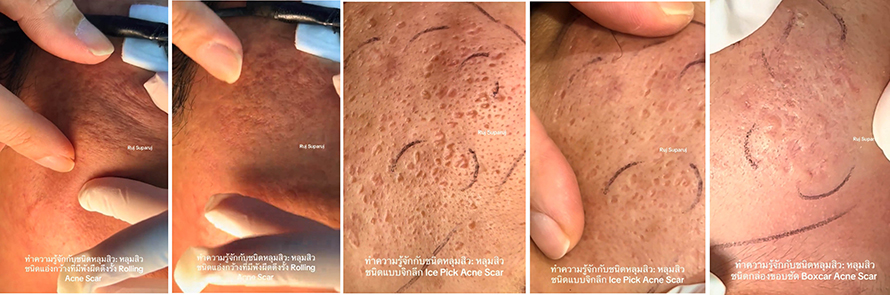
ในบทความนี้จะเน้นที่ หลุมสิวแบบ atrophic ซึ่งแบ่งออกเป็น 3 ชนิดหลัก ได้แก่
1. Rolling scar
2. Boxcar scar
3. Ice Pick scar
ความเข้าใจชนิดของหลุมสิวมีความสำคัญอย่างมาก เพราะ “ชนิดของหลุม” เป็นตัวกำหนดแนวทางการรักษาที่เหมาะสม
1) Rolling Scar – หลุมสิวแบบคลื่น
ลักษณะทางคลินิก
• ผิวดูเป็นลอนคลื่น ไม่เรียบ
• ขอบไม่ชัดเจน
• ปากหลุมกว้าง มักมากกว่า 4–5 มม.
• เมื่อมองด้านข้างจะเห็นเป็นเงาไม่สม่ำเสมอ
กลไกการเกิด
เกิดจาก พังผืด (fibrous bands) ใต้ผิวหนัง ดึงรั้งผิวลงสู่ชั้นลึก ทำให้พื้นผิวด้านบนดูเป็นคลื่น เมื่อดึงผิวขึ้น หลุมมักจะดูตื้นลง
แนวทางการรักษา
• Subcision (การตัดพังผืดใต้ผิว) เพื่อคลายแรงดึงรั้ง
• ร่วมกับ Fractional laser / Picosecond laser, Fractional RF Microneedle เพื่อกระตุ้นการสร้างคอลลาเจน
• อาจเสริมด้วย Program biostimulator หรือ filler ในบางราย
Rolling scar มักตอบสนองต่อการรักษาได้ค่อนข้างดี หากจัดการพังผืดได้เหมาะสม
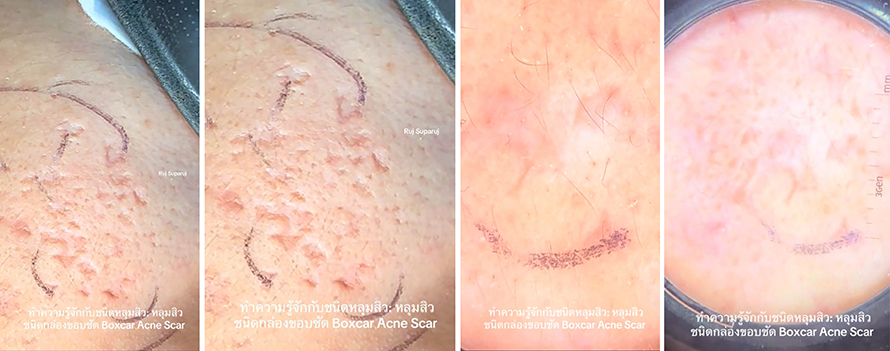
2) Boxcar Scar – หลุมสิวแบบกล่องขอบชัด
ลักษณะทางคลินิก
• หลุมมีขอบชัดเจน
• รูปร่างคล้ายกล่อง หรือวงรี
• ฐานและปากหลุมมีขนาดใกล้เคียงกัน
• ขนาดประมาณ 3–4 มม.
เมื่อดึงผิวขึ้น หลุมมักไม่ตื้นลงมาก ยังเห็นขอบหลุมชัด ต่างจาก rolling scar
กลไกการเกิด
เกิดจากการสูญเสียเนื้อเยื่อผิวหนังเป็นบริเวณชัดเจน และมีพังผืดล้อมรอบผนังหลุม
แนวทางการรักษา
• Ablative หรือ Deep Fractional Laser เพื่อปรับขอบหลุม
• Fractional RF Microneedling กระตุ้นคอลลาเจนในชั้นลึก
• บางรายใช้ TCA CROSS หรือการปรับขอบหลุมเฉพาะจุด
• ในกรณีลึกมาก อาจพิจารณาเทคนิคผ่าตัดเฉพาะจุด (เช่น punch technique)
ผลลัพธ์ขึ้นกับความลึกของหลุม และการเลือกพลังงานที่เหมาะสม
3) Ice Pick Scar – หลุมสิวแบบจิก
ลักษณะทางคลินิก
• ปากแคบ (น้อยกว่า 2 มม.)
• หลุมลึกมาก ลักษณะเป็นรูปตัว V
• ดูเหมือนถูกของแหลมจิกลงไป
เป็นชนิดที่พบได้บ่อยในกลุ่มหลุมลึก และรักษายากที่สุด
กลไกการเกิด
เกิดจากสิวอักเสบรุนแรงทั้ง Pilosebaceous unit และโครงสร้างผิวหนังชั้นลึก ทำให้เกิดการทำลายเนื้อเยื่อเป็นแนวดิ่ง
ความท้าทายในการรักษา
เนื่องจากปากหลุมแคบ พลังงานเลเซอร์หรือเครื่องมือทั่วไปอาจลงไปไม่ถึงก้นหลุม
แนวทางการรักษา
• TCA CROSS (50–90%) tooth pick และ syringe technique แต้มกรดเข้มข้นเฉพาะจุด
• Ultra-deep Picosecond laser Technique ยิงเฉพาะหลุมแบบ point-by-point
• เสริมด้วย fractional resurfacing หรือ RF microneedling เพื่อกระตุ้นคอลลาเจนโดยรวม
ในผู้ที่มีผิวเอเชีย ต้องระวังภาวะรอยดำหลังการอักเสบ (PIH) โดยเฉพาะหลัง TCA
เทคนิคการรักษาอื่นที่ใช้ร่วมกัน
เนื่องจากผู้ป่วยส่วนใหญ่มักมี “หลายชนิดของหลุมสิวในคนเดียวกัน” การรักษาจึงต้องเป็นแบบ Combination Therapy ได้แก่
• Subcision สำหรับ rolling และบางกรณีของ boxcar
• Filler เพื่อยกพื้นหลุม (ผลลัพธ์ชั่วคราว)
• Surgical techniques เช่น Punch excision / Punch elevation
• การใช้ หลายพลังงานร่วมกัน เช่น Fractional CO₂, Er:YAG, Picosecond laser และ Fractional RF
เป้าหมายคือกระตุ้นคอลลาเจนหลายระดับความลึก และลดผลข้างเคียงให้มากที่สุด
แนวคิดสำคัญในการรักษาหลุมสิว
1. ต้องวิเคราะห์ชนิดหลุมอย่างละเอียดก่อนวางแผน
2. มักต้องใช้หลายเทคนิคร่วมกัน
3. ต้องทำหลายครั้งและปรับตามการตอบสนองของผิว
4. การรักษาสิวอย่างถูกต้องตั้งแต่ต้น คือหัวใจสำคัญในการป้องกันหลุมสิว
การเข้าใจชนิดของหลุมสิวอย่างถูกต้อง ช่วยให้สามารถเลือกวิธีรักษาได้แม่นยำ และเพิ่มโอกาสในการฟื้นฟูสภาพผิวให้เรียบเนียนได้อย่างมีประสิทธิภาพ
ผลการรักษาขึ้นอยู่กับสภาพผิวและการตอบสนองของแต่ละบุคคลด้วยนะครับ
Understanding Acne Scar Types: Rolling, Boxcar, and Ice Pick Scars
Overview of Acne Scars
Acne scars are permanent sequelae of severe inflammation, particularly in patients with deep inflammatory acne or chronic, recurrent breakouts. Broadly, acne scars are classified into two main categories:
• Atrophic scars – the most common type
• Hypertrophic / keloid scars – less common
This article focuses on atrophic acne scars, which are further divided into three major subtypes:
1. Rolling scars
2. Boxcar scars
3. Ice pick scars
Correct identification of scar type is crucial, as the morphology of the scar determines the most appropriate treatment strategy.
.
1) Rolling Scars
Clinical Characteristics
• Undulating or wave-like skin surface
• Poorly defined edges
• Wide scar openings, typically greater than 4–5 mm
• Irregular shadowing when viewed from the side
Pathophysiology
Rolling scars are caused by fibrous bands beneath the skin that tether the dermis to deeper structures. This downward traction creates a rolling or uneven surface appearance. When the skin is stretched manually, the scar often appears shallower.
Treatment Approaches
• Subcision to release fibrotic tethering
• Combined with Fractional laser, Picosecond laser, or Fractional RF microneedling to stimulate collagen remodeling
• In selected cases, adjunctive biostimulators or dermal fillers may be used
Rolling scars generally respond well when fibrotic bands are adequately released.
.
2) Boxcar Scars
Clinical Characteristics
• Sharply demarcated edges
• Round, oval, or box-like shape
• Base width similar to the surface opening
• Typically 3–4 mm in diameter
Unlike rolling scars, stretching the skin does not significantly improve their appearance because the edges remain well-defined.
Pathophysiology
Boxcar scars result from localized dermal tissue loss with fibrotic walls surrounding the scar margins.
Treatment Approaches
• Ablative or deep fractional lasers to resurface and soften scar edges
• Fractional RF microneedling to stimulate deep dermal collagen production
• TCA CROSS in selected cases
• For deeper scars, surgical options such as punch excision or punch elevation may be considered
Treatment outcomes depend on scar depth and appropriate energy selection.
.
3) Ice Pick Scars
Clinical Characteristics
• Narrow surface opening (< 2 mm)
• Deep, vertically oriented, V-shaped tract
• Appearance resembles a puncture from a sharp object
Ice pick scars are common among deep atrophic scars and are typically the most challenging to treat.
Pathophysiology
These scars arise from severe inflammation involving the pilosebaceous unit and deeper dermal structures, resulting in vertical tissue destruction.
Treatment Challenges
Due to the narrow surface opening, laser or energy-based devices may not adequately reach the base of the scar.
Treatment Approaches
• TCA CROSS (50–90%), applied using toothpick or syringe techniques for focal chemical reconstruction
• Ultra-deep Picosecond laser technique, delivered point-by-point into individual scars
• Adjunctive fractional resurfacing or RF microneedling for global collagen stimulation
In Asian skin types, caution is necessary due to the risk of post-inflammatory hyperpigmentation (PIH), particularly after TCA application.
.
Additional Combination Treatment Strategies
Because most patients present with multiple scar types simultaneously, management typically requires a combination therapy approach, including:
• Subcision for rolling and selected boxcar scars
• Dermal fillers for immediate elevation (temporary effect)
• Surgical techniques such as punch excision or punch elevation
• Multi-energy combinations including Fractional CO₂, Er:YAG, Picosecond laser, and Fractional RF
The goal is to stimulate collagen at multiple dermal depths while minimizing adverse effects and downtime.
.
Key Principles in Acne Scar Management
1. Accurate scar type assessment is essential before treatment planning.
2. Combination techniques are often required.
3. Multiple treatment sessions are usually necessary.
4. Early and proper acne control is the most important strategy to prevent future scarring.
A thorough understanding of acne scar subtypes enables precise treatment selection and improves the likelihood of achieving smoother, more refined skin texture.
Treatment outcomes vary depending on individual skin characteristics and biological response.
ตัวอย่างการรักษา
https://youtu.be/Yczi1Rldpo8?si=s_GJDesK1nBSMzKk
.....

.....
ปรึกษาคุณหมอหรือสอบถามเพิ่มเติมได้ที่
Tel : 063-959-4392
Line: http://line.me/ti/p/@Demedclinic
Line: @Demedclinic
Wechat/Whatsapp: Demedclinic
IG: https://www.instagram.com/drsuparuj
FB: www.facebook.com/drsuparuj
Youtube: https://bit.ly/3p20YLE
Blockdit: https://bit.ly/3d8vYr1
TikTok : https://vt.tiktok.com/ZSJ141Mdf/
X.com : https://mobile.twitter.com/drruj1
Lemon8 : https://s.lemon8-app.com/s/GgUZYhfpSs
www.demedclinic.com / www.demedhaircenter.com


